
Insider Gaming spoke to Team Vitality Chief Strategy Officer (CSO), Nicolas Maurer, at Global Esports Industry Week in Cologne to get the inside story on how Team Vitality’s historic Counter-Strike roster was built.
In a broad discussion, Nicolas talks us through what lessons the organization has taken from building that success, and how those lessons can be applied to other esports and the unique challenges facing Vitality’s League of Legends division.
Insider Gaming interview with Team Vitality CSO and Co-founder Nicolas Maurer (Interview conducted on July 19)
You guys have built the greatest Counter-Strike roster ever, so can you give insight into how it was built over the years?
So obviously, there is no recipe to create the best team of all time, as people would know. But yeah, I can tell you that the main ideas, let’s say the key choices we’ve made to get there.
So first of all, obviously, the first big moment was creating the team, and before entering Counter-Strike, we had so many proposals on our table, because we knew we wanted to get into the space.
So Vitality was founded in 2013, and we entered Counter-Strike at the end of 2018. During that period, at least after a few years of Vitality, we knew we wanted to join the game.
We wanted to be in all the biggest games in esports, and obviously, League of Legends and Counter-Strike were the two biggest ones.
“Counter-Strike is really a scene where there’s no point being 20s in the world. Either you compete for the top spot or there’s no point.”
Nicolas Maurer on Vitality’s initial Counter-Strike ambition
We were really excited to get in the scene, especially because Counter-Strike has for a long time been very big in France in terms of talent, the French teams, the super teams, all of that.
There was really a big French culture of playing Counter-Strike and having top players. So we are looking at that. We wanted to get in the game, and we had so many offers.
‘I have this roster, or those guys, they might leave their team. You want to get them and build something?’ But we were never really convinced that it would be good enough.
And we never wanted to enter this scene with not enough ambition. Like Counter-Strike is really a scene where there’s no point being 20s in the world. Either you compete for the top spot, and obviously, you cannot really predict that you will be the top one, but you have a shot at being a great team, or there’s no point in terms of the brand recognition, the business around it.
So we wanted to wait for the right opportunity. And then there was this young guy, ZywOo, who was incredibly good, maybe too good even, because many people believed he was a cheater at the time when he was only an online player, and apEX was benched from G2.
We met Apex, and we discussed the idea of him joining Vitality, and building a French roster with ZywOo. And it took shape in a few months, and then we bought apEX and NBK- from G2, and we started there. So that was the big key moment, the first roster.
It worked super well instantly. ZywOo was super good. We won trophies, but we still struggled in Majors, notably, and after a while, we had a lot of roster changes, but we felt we would be too limited in remaining a French organisation, because the talent pool simply was not good enough to reach the top.
“When you have ZywOo, you need to build something so that this guy wins Majors. Not only one. He’s the biggest talent and the GOAT of the game. He needs to win those Majors.”
Nicolas Maurer on building around ZywOo
At the time, it was quite a difficult decision to say, ‘Ok, let’s move away from the French team and go for an international team.’
It did exist with FaZe. That was one of the first examples, but it was still very much a national game, with Fnatic being the Swedish team. Astralis, the Danish team, and so on, and the Brazilian teams, obviously, and so on.
And we said, ‘f**k it. If we want to compete for the top spot, we need to go international.’ And we saw this, and we see this opportunity of the Astralis guys, dupreeh, Magisk, and Zonic, being a bit unhappy with the end of their season as Astralis.
We signed them, and it was a crazy ride. And all the fans in France were like, ‘yeah, you’re destroying the French scene. It’s so bad. What a terrible choice. This will never work.’
For a while, they were right, because it actually didn’t work. Actually, having the French guys who always communicated in French in-game, and the Danish guys who always spoke Danish. So you had this language shift that’s not easy when you have to make split-second decisions.
So they needed to adapt to working in English. That’s point one. And point two, there was a very different cultural approach to the game.
The guy coming from gla1ve as in-game leader to Vitality with apEX, who was also new as an in-game leader. It was quite complicated at the beginning.
But it finally took shape. And we had this team winning the 2023 Paris Major at home, which is obviously the biggest memory in all Vitality’s history. Because five years before winning a Major, it was long.
And especially when you have ZywOo, you need to build something so that this guy wins Majors. Not only one. He’s the biggest talent and the GOAT of the game. He needs to win those Majors.
So we had this responsibility to create what was needed around him. And after that, there were a few more big choices we’ve made that led to the current team.
One was replacing dupreeh with FlameZ, which was a very tough decision because dupreeh was just crowned the unique five-time Major winner. So, replacing the biggest legend in the game, maybe with an up-and-coming guy that obviously was very talented, but you could not really predict if he would establish himself as a top player or not. But we sensed that if we wanted to be future-proof and be one step ahead, it was a needed change.
“The moment we won it, we did celebrate properly, and it was insane because in Paris, it was with all of our fans, all the staff. So there was this brief moment of incredible celebration, but we wanted more.”
Nicolas Maurer on the decision to replace dupreeh
Again, against a lot of criticism from all of our followers and the community. ‘Hey, how can you do that to such a legend?’ But it was a tough decision. Obviously, in retrospect, the right one, but you never know when you do it.
And the last, let’s say, decision obviously that led to the current team was replacing Spinx with ropz, which is not an easy one, also because in terms of firepower, when you look at those two players, you could say they’re kind of similar.
But at the end of the day, there’s a huge difference in terms of the clutch factor, the experience, and just ropz being a perfect team player and a winner that will always show up and deliver when it matters.
So he instantly upgraded the team, as we know, what happened early in 2025. ropz joined, and then after the first tournament, that was a bit disappointing, we won seven tournaments in a row, leading to the Austin Major. So you could never predict something like that. Our plan for that, and it worked like a dream.
So we really feel that change was the final piece of the puzzle, but a puzzle that took years to fully build.
The decision to remove dupreeh really stands out, because the team won the Paris Major, it wasn’t broken at that time. What analysis went into that decision?
So I think it was a very tough decision, and I think ultimately why we made the decision comes from who we are in terms of culture and Vitality. We always have incredible ambition. So winning one Major was never the end goal.
Obviously, the moment we won it, we did celebrate properly, and it was insane because in Paris, it was with all of our fans, all the staff.
So there was this brief moment of incredible celebration, but we wanted more, and we felt that it was one of the ways to get there and have more.
But it came with a huge risk of, indeed, breaking something that was working really well. So, a tough decision, and let’s say you aggregate a myriad of factors, ‘OK, what kind of difference does it create in the balance of the team? What would FlameZ bring that we don’t have right now? What can be the progression and improvement of this guy that’s already super talented, super young?’
“That was a key lesson, that it’s just irrelevant, because when you win, everything is forgotten. You just have to win.”
Nicolas Maurer on ignoring community noise
So we kind of bet on how he can evolve, and that means trying to evaluate the guy on his current skills, what he can develop in-game, and also in terms of his mindset.
Because dupreeh was and is a proven winner. Obviously, he has won five Majors, and you replace him with a guy who is extremely talented and has a ton of potential. But you don’t really know how this guy will behave in a Grand Final, and that you can never fully predict that, by the way.
So a lot of components. But I would say the huge ambition and also our lesson year after year, that what the community could think is irrelevant to us, because we felt that with the Paris Major.
When we destroyed the French team in 2021 after the Stockholm Major, everyone told us, ‘Hey, you’re s**t, blah, blah, blah.’ But then, when we won, everyone told us, ‘You’re the best.’ And that was a key lesson that it’s just irrelevant, because when you win, everything is forgotten. You just have to win.
So the only reason we make our decision is what gives us the best shot at winning again and again. So it was probably a close call. And we pondered and took a while to make it. But we thought it was worth the risk, basically. Yes, it paid off. Obviously, now we know.
But it was a difficult one.
“When you have one big talent, you will always be able to build around it because people will want to join that team because it’s just attractive… When you lack talent, you will always lose the close battles in the off-season because, at the end of the day, you can offer more money, but if the team has fewer prospects and potential, players will not join.”
Nicolas Maurer on building a roster around talent
In terms of your other esports, what lessons have you taken from Counter-Strike that you can kind of fit into the other esports?
So one obvious lesson, but it’s an easy one, and you cannot really replicate it. But it’s that talent attracts talent. It’s kind of either a vicious circle or a virtuous circle that you can see.
When you have talent, people will want to join your team, and when you have the best talent like ZywOo, you get ropz. I oversimplify.
But you know that when you have one big talent, you will always be able to build around it because people will want to join that team because it’s just attractive. You know this team will perform no matter what. And we also learned the exact opposite.
When you lack talent, you will always lose the close battles in the off-season because, at the end of the day, you can offer more money, but if the team has fewer prospects and potential, players will not join. So it’s super hard to break that loop.
And for example, ZywOo in CS for us is like Caps in League for G2. The players around might change around the years, but you still have this core and this team that will succeed no matter what. They won’t win every year, but they will succeed. You build on that.
“We were in competition with Fnatic to get Vladi. He was probably close between us and Fnatic. At the end of the day, he picked Fnatic, and it makes sense. Fnatic usually goes to Worlds every year. So as a player, you will want to join those orgs that have legacy in-game.”
Nicolas Maurer on Vitality’s struggling to Attract League of Legends Talent
When you don’t have that, you need to make bold decisions. So either you invest like crazy to rebuild a key roster, or you try other ways to sneak around with slowly building your own rookies, but it’s very difficult.
So that’s lesson number one. And when you have talent, you need to do everything to retain that talent, nurture him, make sure they are comfortable in Vitality, they see themselves evolving in the organisation. So that’s something we applied in other games with Zen, for example, in Rocket League.
When Zen joined in Rocket League, we won everything. Now it’s a bit more difficult for us, but we always have Zen, and we’ll always be able to build on such a talent, and we’ll always be relevant in the game. So it’s super important that we have franchise players who love being in Vitality.
There will be hard times. It will not always be perfect. We will disagree on some things, but they respect what we do. They trust us, and ultimately that will pay off for everyone. So that’s one big lesson.
Another one is just forget what people think or opinions they can have. Sometimes it’s valid, sometimes it’s not. We don’t care. We just need to follow our own belief of what will lead us to victory because, at the end of the day, that’s the only thing that matters in competition.
So we believe this will lead us there. That’s what we do. I would say those are the two lessons.
But again, at the end of the day, there is no magic recipe, and you will always have a lot of judgment calls when it comes to performance because, at the end of the day, it’s people, it’s human. The way they will interact, you can never fully predict. That’s also the beauty of sports.
You can see those principles in action because if you look at the Valorant team, you have Derke and you have Chronicle. People are going to want to play with Derke and Chronicle, right?
Even if with Derke it didn’t work out as planned or not as good as we planned it initially. But piece after piece, we bring the talent, and we try to build teams that can aim to be the best, and let’s see what we do in London this weekend.
With League, as you say, it’s a bit of a different thing, because there’s one gigantic talent in EU, it’s Caps. But you could say Naak Nako is the guy to build around, right?
Could be, could be.
But there’s also different dynamics with League because KC has Caliste, the new French talent, so how do you overcome the challenge in terms of the League roster?
First of all, I don’t know, because if I knew, we would have better success in League. I mean, it’s been eight years since we went to Worlds. I have a very fond memory of the 2018 Worlds campaign, but it’s too old now. So we need to renew a bit what happens in League.
Now, we don’t have the key. Part of what you mentioned is indeed, it’s difficult for us. It has always been difficult for us in League because we don’t have the legacy.
So, for example, we were in competition with Fnatic to get Vladi. I mean, I’m not talking about what happened afterwards in performance, just a good example of, he was probably close between us and Fnatic.
At the end of the day, he picked Fnatic, and it makes sense. Fnatic usually goes to Worlds every year. So as a player, you will want to join those orgs that have legacy in-game. So when you don’t have that, it’s more difficult. You need to do more.
So you need maybe sometimes luck of a good prospect. You need to have a good generation of players. You need to make extremely good decisions, much better than the competition, because you’re simply playing with a handicap.
That’s what we have in League right now. So I don’t have the answer, or we’d do it.
What I know is that we have only one player under contract for the future. It’s Naak Nako. He’s the key to the future of Vitality in League.
Now, let’s see what we do around him. But we have a generational talent in-house, so now we need to be smart and make the right decision to surround him with the right team to succeed.
In terms of the Spring Split that just happened, Neo tweeted about being disappointed with it, because you obviously had a really good regular season, and it fell apart in the playoffs. Do you have any reflections on that? Were there any scheduling issues? Was there anything you would want to change internally? Would you want the league to change anything?
No, not the League. No. We all have to adapt to the schedule, the way it’s done. I’m never too fond of excuses. ‘Oh, we had to wait.’ Whatever.
At the end of the day, we are professionals. So we need to prepare accordingly. Doesn’t mean there aren’t sometimes issues. And especially this split with the League on the road.
The schedule was weird, with teams having played six, seven games, and others having only played one. It was a bit weird. But Riot sees that. Everyone sees that. It will be fixed. So I have no concern.
And anyway, at the end of the day, we need to adapt to the rules. So it’s on us. And I think, by the way, as a general note, I think mentality evolved a lot in pro players’ mindset, because when we joined esport in 2013, it was much less mature, and you always heard excuses like that.
‘Oh, they had one more day to rest before their semis.’ Yes. And the next time it will be the opposite, so you guys have to be ready for that. I don’t want to hear that.
I know it’s much more of a professional environment in the way we prepare and everything. So that’s a big progress overall.
And for us, yes, we identified issues and things we have not done well enough. So I don’t go into specifics, but at least we have, hopefully, a fairly good understanding of what went wrong, and hopefully, we’ll try to fix that for Summer. Let’s see.
“There is a huge incentive to be at the top. We are one of the orgs strong enough to be able to play that game and try to compete in the Club Championship. It leads us to go and fall into many new games…
I really enjoyed EWC when it helped us to do things that we could not do financially beforehand.”Nicolas Maurer on how EWC has enabled Vitality to expand its horizons
I wanted to ask about EWC and Vitality. We see every year, there’s a raft of announcements of players joining Vitality to do with chess or fighting games, etc. How important are the financial incentives of EWC for those signings and for the org generally?
Very important. You see, it’s public, the Club Championship rewards $7 million to the winner, $5 million to second, $4 million, $3 million, $2 million…
So there is a huge incentive to be at the top. We are one of the orgs strong enough to be able to play that game and try to compete in the Club Championship. It leads us to go and fall into many new games. I would say that there is a balance to find.
I really enjoyed EWC when it helped us to do things that we could not do financially beforehand. So, going to have those specific signings in South Korea with StarCraft, and joining on Tekken, it was super interesting to us, also for the brand, at last to have some connection to South Korea.
Going to mobile, notably with MLBB. Those are things that we wanted to do in the first place and that we did way ahead of time, thanks to the opportunity of EWC.
Now I want us to be careful in also not pushing it too far and trying to be in every one of the 24 games. It’s just too complex. Logistics and investment are very complicated.
And there is also a balance to find because if you’re everywhere, then the stories are less and less relevant and interesting for your fans. So we’re trying to nail the right balance where every signing is there for a reason. We have a nice story to tell.
It’s good for a specific part of our audience. It’s good for specific partners. So we want to do stuff that makes sense for us, not only for EWC.
And that’s, I would say, where we need to find the right balance, which is not easy. But yes, we need to be careful about that and not have an arms race to win EWC.
But also, we want to be there. It’s an important trophy for us. The financial incentive is very big, and obviously, on top of all of that, EWC happening in Paris this year is an incredible opportunity for our fans, our partners, and for the brand as a whole.
So we want to make it count even more.
Are there any properties that the EWC incentives allowed you to explore where you now feel committed to the space, even if EWC went away?
A lot.
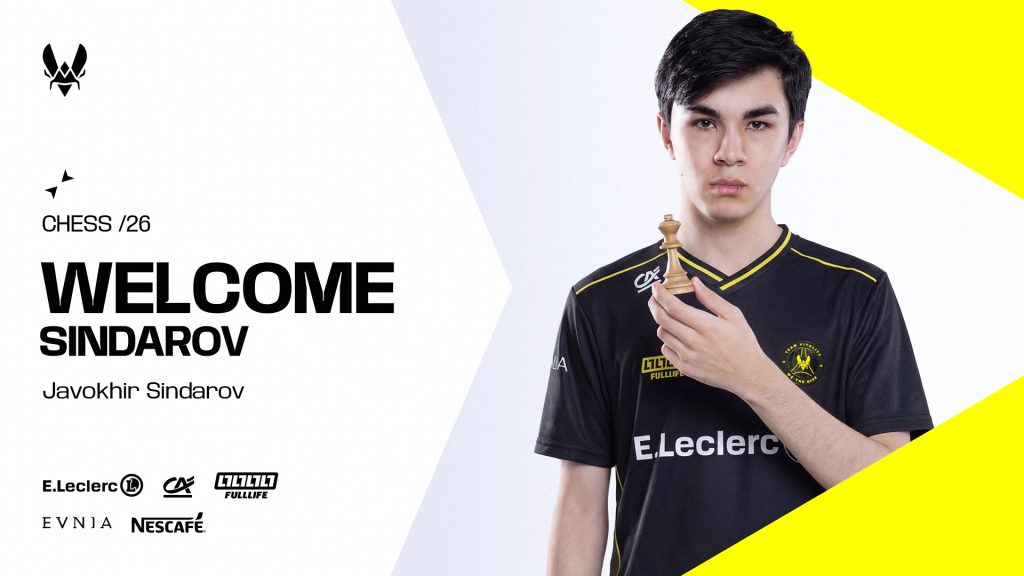
For example, chess is something we had in mind. I think we explored the idea of having chess players with a few other orgs three or four years ago. I don’t recall.
We had a conversation with Chess.com about an esports league. It didn’t come to fruition. The economics were not good enough.
But the underlying idea that chess could be an esport, that it could be super nice to create crossovers, that a fraction of our fans is already following chess, that our partners could be very interested in chess, all of that was there.
It was probably not enough in aggregate to make the move, but then you add EWC in that equation. Yeah, chess then is obvious. And if tomorrow EWC were to remove chess, we would keep on having chess players.
Our fans love it. Our partners love being able to activate our chess players. It’s super interesting for media because they have different angles to look at chess, esports, and how it evolves. So that’s one example.
There are many others. Mobile Legends, MLBB, Women, obviously, it’s the same. Good thing, our roster is probably always the favorite to win EWC, so that’s nice.
But moving to Indonesia, having headquarters there, seeing the passion, the fans in Indonesia, is a game-changer for us too. That is something that will remain no matter what.
End of Interview
Let us know who you want to see on Team Vitality’s LoL team on Insider Gaming’s Discord
For other news, see League of Legends MSI Patch and sign up to the Insider Gaming newsletter

Darragh is an Esports Journalist for Insider Gaming specialising in Counter-Strike. He loves to explore how esports teams work, or why they very often do not.
More from Darragh Harbinson
MOBILE APP
Level Up Your Gaming News
Real-time news, exclusive podcasts, push alerts, and a better reading experience.
Available on iOS & Android

Comments
[gs-fb-comments]