
RuneScape: Dragonwilds is shaping up to be one of Jagex’s most ambitious departures from its long-running MMO roots, blending survival gameplay with the studio’s signature RPG systems and unmistakable RuneScape DNA. Set on a brand-new continent with an original character, the game is designed to welcome both longtime fans and complete newcomers without requiring any prior knowledge of the franchise.
In this interview during Summer Game Fest, I spoke with Robert Galassi-Fox, Director of Product, along with the Rick Turek, Creative Director, to break down how Dragonwilds was built, how its skill-based progression system works, and how the team is adapting classic RuneScape ideas into a modern survival experience. The discussion also touches on co-op design, development challenges, and how the upcoming Umbral Sands content expands the game’s direction.
Albert Perkins – Senior Producer, Insider Gaming: If someone is interested in RuneScape: Dragon Wilds and wants to play for the first time, what can they look forward to? Could you tell me a little bit about what the core of the game is about?
Rick Turek, Product Director: Yeah, so we intentionally made Runescape Dragon Wilds be something that could be your first survival game or something that could be your first RuneScape game, or both. Oh, cool. Okay, so we wanted to make it so it was introductory. It’s a survival game where you’re not having to look after lots of stats, right? There are survival games out there where you have those like just meters and bars, and you have to keep everything satiated in order to survive. We’re not that right. We’re this sort of mix of survival light, sort of this RPG elements and, and sort of this DNA from the RuneScape MMOs, but in a way that is remixed for a new audience. So we, we’ve worked with the RuneScape teams, right? So there are three sort of game pillars within Jagex, right? You’ve got old school Runescape, okay, which is the revival of a sort of older version, kind of like vile classic, okay, of the RuneScape franchise, and that’s doing it incredibly well. It’s really great, and there’s an entire development team behind it. You’ve got RuneScape, which we sort of called RuneScape three, which is the most sort of up to date version of the MMO, and now you’ve got Dragon Miles, and Dragon Miles is a survival game in the RuneScape universe, but it’s set on a new continent. You play as a brand new character. Oh, cool, there’s no like legacy, and we introduce characters and themes and thematics that is, if you know RuneScape, you’re going to see that, you’re going to understand it, but if you don’t know RuneScape, it’s still delivered in a way that will be like, you know, whatever the race the first time,
Robert Galassi-Fox, Creative Director: You’re not missing out necessarily like the way there will be little winks and nods, but not having played a 25 year old MMO, it is truly meant to be something that you can just onboard into and just enjoy.
Albert Perkins – Senior Producer, Insider Gaming: That’s great that it’s so accessible for newcomers to jump right in. You mentioned RPG elements – how does the leveling system work in this game? Is it progressive?
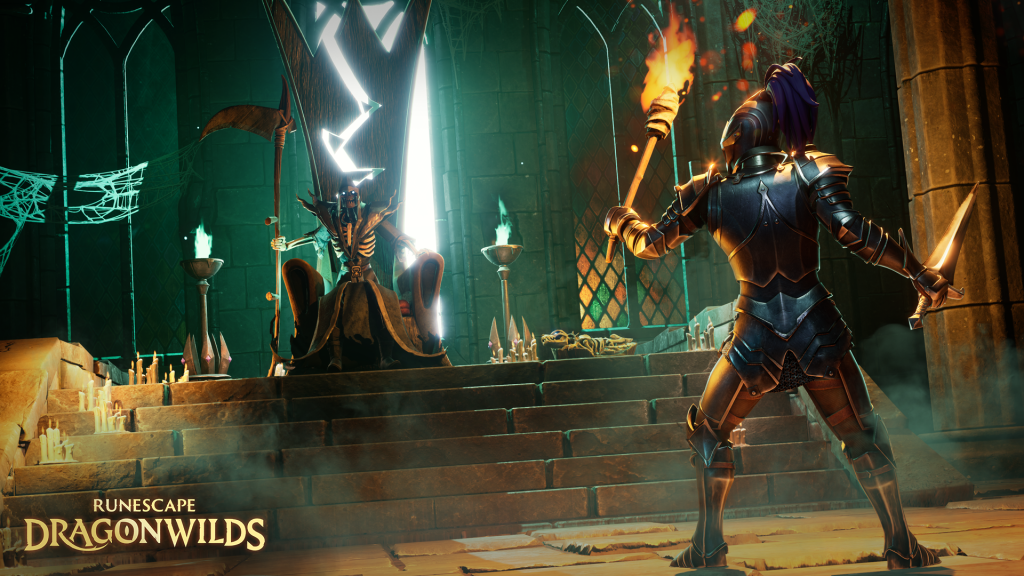
Robert Galassi-Fox, Creative Director: So part of like what Runescape DNA we like that is very important to the main titles. It’s like unlike a conventional leveling system that you’d have, right? I level up, maybe there’s some attribute points that I get to kind of assign or whatever, right? Instead, it’s much more in the vein of like for those who are unaffiliated, like Morrowind or Oblivion, where I’m doing an action and I have these particular skills that I’m leveling up. If I’m chopping a tree, I’m getting wood cutting XP. I level up wood cutting, and then slowly, as I gain more levels in it, I start mastering it in a way I can. I unlock special spells, I unlock special abilities that allow me to do it more efficiently, or cut down multiple trees in like one, in like one spell cast, right? And the idea is that we’ll have things, so it’s wood cutting, rune crafting, mining, combat, melee, sorry, combats melee, but then magic and range cooking, right? So there’s all these different sort of aspects, so you can level up a bunch of different things, but it also, let’s say, if you’re playing with your friends, you guys can diversify, you may want to be sword and board, very traditional, like melee fighter, where your friend wants to play a mage, but that person also wants to do, they’re like, I love cooking, or I love crafting, like I don’t want to do any of that. I just want to kill stuff and bring that stuff back. Or you have another friend who’s like, I just want to gather, I lose myself in wood cutting, and I’ll build our base for us, right? Yeah, so there’s the idea is that instead of having, you know, like elaborate skill trees or anything, we instead say you are kind of, you’re starting on a journey of like learning how to do something, and as you master it, you get better spells, better abilities, more cool things that you can do, and even if you were to play solo, we don’t want that to necessarily be restrictive, right? So you want to play on your own, you just level up all those things anyway, because you’re. Doing them right, and so you get access. I would say, like, two more broad sets based on what your play style is, as opposed to having to think about, like, oh, I need to have, you know, 50 cons and 30 strength, and this, it’s just instead play the game, you get better at it, you get access to cool stuff.
Albert Perkins – Senior Producer, Insider Gaming: That’s a fantastic approach. It allows players who might prefer crafting over combat to ease into those mechanics naturally at their own pace.
Rick Turek, Product Director: Crafting is like the heart to how you get stronger, as well. Sure, you have to craft that again, craft better weapons, so it’s, it’s all, it’s all sort of part of the loop, but as Fox said, you have a cooperative element to the game, so we’re full-player co-op on just your standard listen servers, we’re six player co-op on dedicated servers, and we wanted the experience to be fun solo, right? So you can do, there’s nothing that’s going to be restricted to you, you can play everything you play at your own pace, in your own time, but if you want to play cooperatively, we’ve built features in a way that allow for, like, you know, either creative expression or expression of the play style that you like, like, as you say, right? I just want to do the crafting stuff, you go get the materials, I’ll piece it all together.
Albert Perkins – Senior Producer, Insider Gaming: Excellent.
Rick Turek, Product Director: Yeah, it’s, it’s very approachable in that way.
Albert Perkins – Senior Producer, Insider Gaming: Looking at past RuneScape games, what specific elements did you take from them and implement into Dragon Wilds?
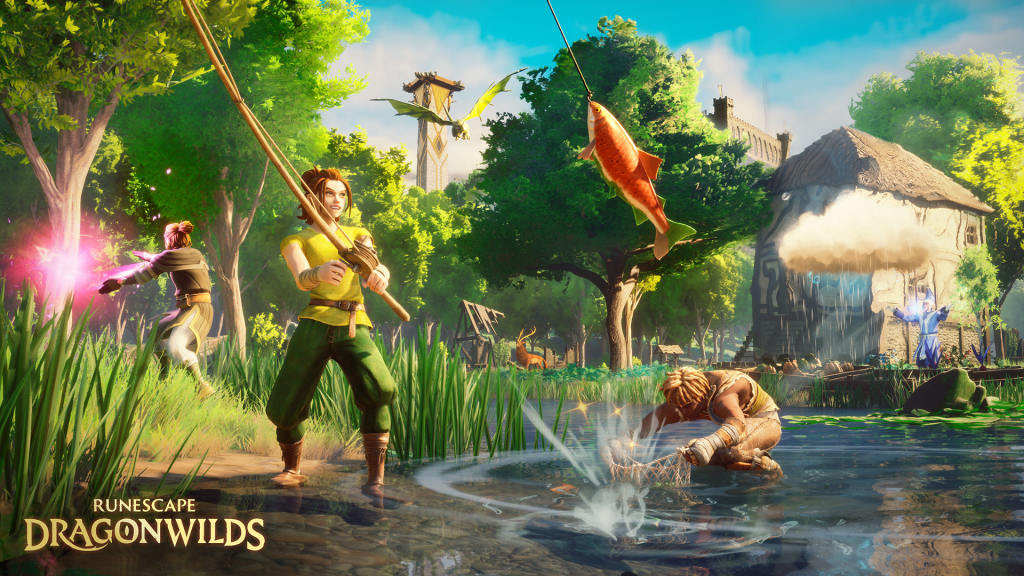
Rick Turek, Product Director: The beating heart is the skills, right? So, the Runescape game, you could call the skilling game, it’s the major hook, and there are things with skilling, as with an MMO, it’s a really long tail, and grind is a part of that experience. So we brought skills over to this, but unlike the MMOs, we’re not designed to be played forever, we’re, you know, we’re a box product, and while we will continue updating the game with new things, and there is an element of grind, if you really want to get to the top skill, it’s nowhere near the amount of hours that you would expect. So, like, well, How do we ensure that we have this survival core where it’s more about mastery of material discovery and regression. Okay, with this idea of every action skills you work right, and you grind skills and new things. So, skilling is one of the core things. We sort of remixed it for the survival genre. Quests is another huge thing. Okay, so you know Runescape is known for its sort of diverse quests, but they can be quirky, they can sort of subvert expectations. So, we tried to implement that within. I mean, dragons is another huge thing. So, dragons, you know, Runescape brought that over, and we made it like the cool player fantasy, which is you are a dragon slayer.
Robert Galassi-Fox, Creative Director: Which for people who had played sort of the original RuneScape meeting, still now one of the big first major quest lines that is a little bit within your crosshairs in the longer timeline, is literally called Dragon Slayer. It’s part of what sort of evokes like the we want this Dragon Slayer fantasy, so we’re almost, we’re trying to match that, but make it a little bit more brand characters, story,
Rick Turek, Product Director: So, as mentioned, we have like 25 years of RuneScape history we can pull from, or characters that we can pull from, and we use that. So, again, if it doesn’t matter if you’re a fan of, like, high fantasy, there are tropes that you know you would expect in any high fantasy game, but then there are these little quirky things that are from a RuneScape game that you may never have seen before in high fantasy, which makes it interesting again for a new player. If you’re an existing player, you go, ‘Oh, I see they brought this over. But yeah, little Easter egg for exactly, yeah. So we try to bring that as much as possible, but yeah, it’s.. we’re a British company, you know. We try to infuse a lot of our dialog with this sort of Monty Python-esque humor. We’ve got some fantastic narrative writers and designers on the team as well, so they try and bring a lot of that authenticity to the game for new and existing players.
Robert Galassi-Fox, Creative Director: Item descriptions and quests, and all sorts.
Albert Perkins – Senior Producer, Insider Gaming: From a development standpoint, could you talk about some of the challenges you faced while making this game?
Robert Galassi-Fox, Creative Director: I mean, I think that, you know, the biggest decision, sort of at the outset, was engine, the so there were games that had been in development prior to us deciding on survival, right? I think one of the biggest choices we made was on Unreal, but it also meant bringing in, because the studio hadn’t worked on an Unreal title before, bringing in experts, right? So Rick himself has worked at AAA studios, right, and as have some of the people that now work on Dragon Miles, certainly don’t bill ourselves as like a trip. But that experience has helped sort of build out knowledge sets, because we have members of our team who have come from the MMOs, we have members of our team who are completely new to RuneScape, and we have people who are a little bit of both, and I think that that’s been it’s been a sort of, it’s a learning for the studio overall, but it’s it’s been a boon for us, and that, because it’s a new venture, it’s also been helpful.
Rick Turek, Product Director: There’s not been technical hurdles that we’ve, like, had to scratch our heads and go, you know, how are we ever going to overcome this? I would say the biggest challenge we had was Covid, right? The team during Covid, wow, and was went remote, so like the entire game from the start to what you see now and what will be released, you know, later this year has been in a completely remote development team, which was a huge challenge for all of us, because we had to change the way we work.
Robert Galassi-Fox, Creative Director: Absolutely, we get together like around twice a year, just to celebrate moments and bring the team together.
Rick Turek, Product Director: We have staff that’s in Europe, you know, and dispersed all around, so it’s like to get everyone, it’s like, you know, people have kids, that’s a challenge.
Robert Galassi-Fox, Creative Director: Different way of development than I think that you or I or most of the team has worked through, right, because you’re used to having someone right next to you at a desk that you can talk to. We were talking about this today, right, that we sort of missed that socialization, but it’s also one where I think we’ve had a lot of time on the team to reflect how helpful. Well, how different it’s been. There, there are pluses and minuses, but it also gives a lot of, a lot of the team freedom in terms of making sure that they can be at home and be available to their families.
Albert Perkins – Senior Producer, Insider Gaming: That’s a big adjustment for sure. In an office setting, it’s easy to ask someone at the next desk to quickly look at a block of code. Remotely, you always have to wonder if they’re available or have a second to help out.
Rick Turek, Product Director: In the pool, you have to have that first five minutes. How you doing, and what’s going on? Yeah, so it’s rather than just go, hey dude, can you look at this?
Robert Galassi-Fox, Creative Director: Yeah, right, meetings, meetings has always been a huge thing, because it’s you’re remote, you end up having to meet a lot more than you would, and it’s been something that you know we’ve struggled against, certainly as like managers, where you know we need to need to have moments of alignment, we need different groups talking to each other, but you know you can have people’s calendars fill up so quickly that it’s they need time to do it, so there’s this constant like culling, and then it starts building back up again in culling. There’s just things that you learn from all of this that I think I mean we’re still learning even today, of just like what’s the perfect way, and the real answer is you just have to keep kind of changing.
Rick Turek, Product Director: Keep iterating, right? Yeah, to small things, then even when you think you’ve got it figured out, it might be that you change the phase of game development you’re in, which requires more alignment, or you know, or less alignment. There might be points where actually we need the team to got to stop having all of these meetings because the team needs more time to develop. It’s like, so then you start nuking things, and then you, then it’s a cycle, and it’s like, well, wait, people feel like they’re left out of working in silos. So, yeah, it’s like this constant refinement to make sure that not only is the game development, you know, going according to plan, but the team’s morale is high enough, you know, they don’t feel too siloed since that’s I think that’s been the biggest challenge for sure. It is,
Robert Galassi-Fox, Creative Director: I think, that you hit it right on.
Albert Perkins – Senior Producer, Insider Gaming: During development, was there a specific idea or feature envisioned by the team that, once implemented, provided a euphoric moment where everything just clicked exactly as intended?
Robert Galassi-Fox, Creative Director: Skills was a big one, cooking was a big one. Okay, cooking refresh that we did.
Rick Turek, Product Director: Yeah, so I don’t want to talk about skills, because that was me, cooking, trying to the team, the team is incredibly one, creative, and two, just want the best of the game, but yeah, we, we implemented a way to do cooking, and it was like we were seeing from the data and some of the feedback that it wasn’t like people weren’t engaging with it in the way in which we envisioned. Okay, so we had, you know, I mean, you probably better than talk about this.
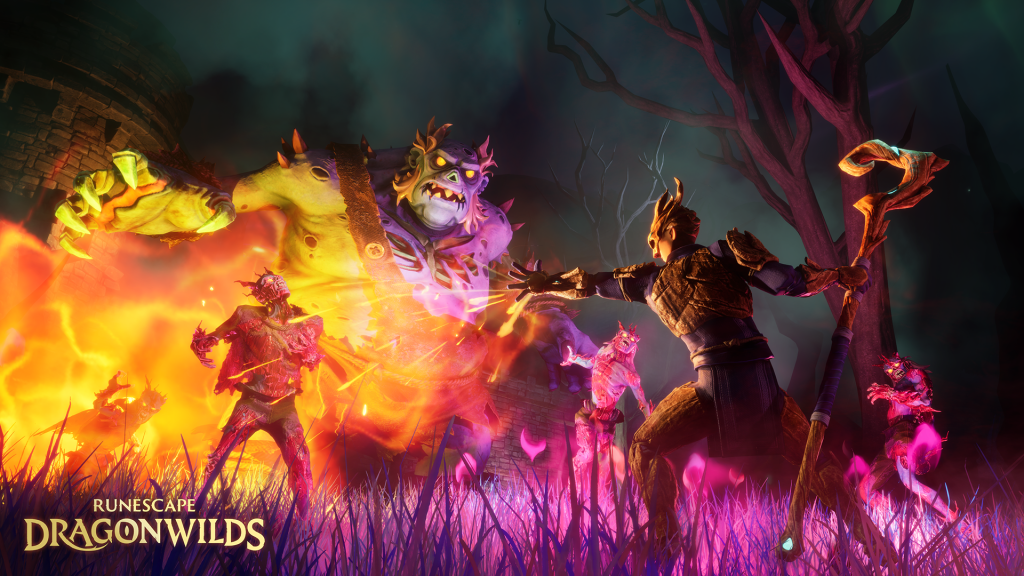
Robert Galassi-Fox, Creative Director: We went back to roots, right? So it even though, like, roots with RuneScape, right? So it became a question of, like, how can we make this more impactful, because at the time it was just really upping like the. Thirst and hunger, we hadn’t really touched it since Alpha, and we wanted to kind of breathe a little bit more life into some of the different, because again, like the skilling itself, there’s gameplay elements to it, there’s things that you have to do, and I think that the team came together and looked towards RuneScape in terms of how are they doing it, and then what way are they implementing it? And did our own little twist on it, completely revamped the system, had a ton of player feedback into it. Ranged combat, we, we brought like we have an incredible kind of skills team that really tries to think about, like, how do we, how do we take this concept from the MMOs and turn it into something that we can use, but range combat, we were, we were doing the implementation of it when we had actually pulled the community on, like, hey, we were kind of thinking, like, do you guys want crossbows and shields, or do you want to do throw pots, chin chunk, there’s an animal, literally called a chinchamba that you can throw, and it’s a bomb, right, oh, that’s amazing. And it’s canonical with RuneScape stuff, and overwhelmingly everyone was like, we want crossbows and shields. Awesome. So, you know, there are there are elements of that that even though it kind of, it did add a lot of work that we had to do, it was in response to both like thoughts that the game team was having and incorporating some of that feedback from the community. I think, especially last year, there was a lot of that. Now, what’s happened is because we’re getting all of that community feedback and we’re trying to get it in the hands of the team. It’s kind of, it’s basically being built into these larger quarterly updates that we have, right? So, um, real Sands, for an example, has a real tip of the hat to some of the older RuneScape players. May seem very like silly. We’re adding a new mount that is just a flying carpet now. To any of us, it’s just kind of, oh, that’s kind of cool. Yeah, for RuneScape players, that’s like a deep cut. They’re like, that’s awesome, right? So, like, what, like, there are things like that that are that come from the team that, in terms of like how they’re thinking and things that they want to implement, mean the Moon Guru that are coming with with almost Sands is also like a really cool new NPC, like it’s a friendly faction that you’re going to be interacting with, which is completely unique to that area of, like, we hadn’t been done anything like this before.
Rick Turek, Product Director: I would say there’s things that we, we’ve built in the development, we’ve created like the skills and the way in which was implemented, the skills was was a sort of an answer to a development question that we think is as the innovation to the genre, because the way in which we call them survival spells, they, we were playing so many survival games, right? Sure, fans of mermans, because we’re making, how many trees you want to chop, and how many rocks do you want? Many times I’ve like chopped a tree, and then the loop didn’t change, so then you know we developed this idea of survival skills, which are unlike unlocks you get from the some other like just leveling up, okay, and they completely can either circumvent the loop or, you know, improve it in some way. So, instead of just, you know, going flack, flack, flack with a tree, you use a magical spell, which is power behind runes. It’s good, and you know, it spins this actual, this projection, you actually call it actual projection, and it goes, you can hit multiple trees at a time, right? Follow up spell. Well, then you
Robert Galassi-Fox, Creative Director: Target like the fallen trees, and then explode them into the material that you need, as opposed to chopping each other individually. Yeah, so it’s just, how can we make this? How can we add utility? How can we enhance gameplay? How can we make something interesting, or in some cases something funny, yeah, but I think it’s just in the charm that comes through from the from the design process, like the team is phenomenal.
Rick Turek, Product Director: I also don’t want to like poke us down and just like the design, because we have like a cross-discipline team, like our tech Im making tools for, as you know that when you build, you know, an environment, you know, you can hand place, you know, trees and the crests and the resources, like our TA team very early developed a tool for us that would scatter these tools in a realistic way, and you could adapt and say what you wanted in them, paint certain bits out. Oh, that’s innovation, right? Yeah, it’s not player facing, but for us as developers, like, oh, that’s really cool, same, like you know, our engineers creating tools for us, or the animation systems that the guys have put in.
Robert Galassi-Fox, Creative Director: Yeah, it’s just all accumulates to trying to develop something over many, many years while forming remotely rockstars, like that’s really the thing I’ve been like. People are firing on all cylinders in a way that any situation where I’d like you wouldn’t necessarily expect it because of it. It’s just great.
Rick Turek, Product Director: It’s amazing.
Robert Galassi-Fox, Creative Director: You turn over a rock in this game and someone’s done some fantastic work in it.
Albert Perkins – Senior Producer, Insider Gaming: It sounds like the entire team is firing on all cylinders simultaneously. That’s awesome.
Rick Turek, Product Director: We started with like a really small team, I think. We’re about 15, something like that, and grown over time, and you know it could be people that are here from the beginning or people that joined, like, last month, and you can see there’s like a dedication already. So, yeah, we’re really blessed for the team.
Albert Perkins – Senior Producer, Insider Gaming: That’s fantastic. Shifting to gameplay for a moment: what can players expect from the core mechanics? Is the gameplay adaptive depending on the circumstances you’re facing, or are there specific settings you lock in from the beginning?
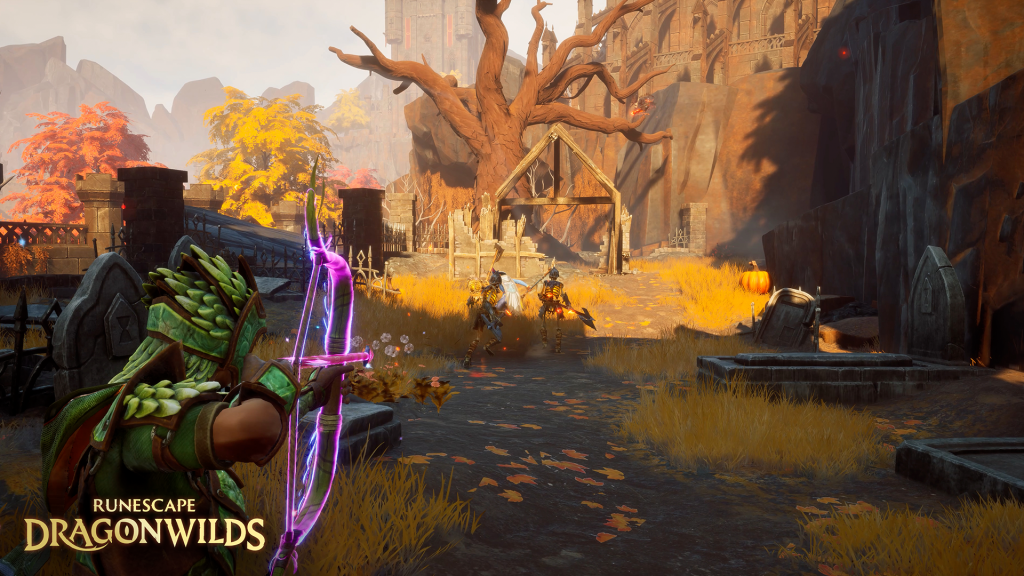
Rick Turek, Product Director: So, first of all, you, we have different game modes, so we have what we call the campaign game mode, which is which can be chosen between normal and hard difficulty, right? As like gameplay on the sticks, it’s it’s more like a third person action game or RPG, so you can go play the campaign, you can play like a creative version and use some of the tools like building, like base building, where you just get all the resources, and you don’t have to care, you can switch, and you can like customize everything I serve to you, you know, a bit like Minecraft, whereas I don’t want enemies to attack me, I don’t want to have hunger, you know, I just want all the resources, and I want to build stuff. Yeah, crazy, I have an 11 year old, exactly, yeah, and like that’s the first thing we’ll be doing when we hook up is like, like, let’s just go in creative mode and build a big base, and then from from these different game modes, if we talk about the campaign for a minute, like, you typically, if you want to go on normal, that’s how we’ve designed it, but if you want a hardcore experience, is that we tune up some of the difficulty right across the survival friction, the enemy damage, you know, and health output, and stuff like that. Inside the game, you’ve got third person action, you can either like wield a sword, you know, melee weapons, you can do bow and arrow, or magic pupus with a staff, and these are your three sort of combat styles, as well as that, you have different, you know, traversal abilities, you have systems where you can construct things, and it’s not just about building bases, like we may, you know, we have this handcrafted world, it’s not procedurally generated, it’s handcrafted, and we’ve tried to think about how we can encourage players to use all of these different systems in fun ways, so you might come across like a massive crevice, as, okay, well, what can I do here? It’s like, well, we actually have a spell where you can infuse your legs to make you do this massive jump over. Oh, it’s all you can like use word and create like a bridge to get across, right? Different ways of progressing, so you kind of have this sandbox approach to exploration, but it’s not in this procedurally generated way, it’s a very hand-tailored way, and yeah, it’s I think anyone who’s played any third-person action will be able to immediately pick it up, but then if you’re a survival, you know, enthusiastical player, you’ll fit right at home, or as I say, if you just, it is your first survival game, you’ll get it, it plays very differently to the RuneScape MMOs, right, which is an isometric sort of, you know, click click based adventure, where it’s that more traditional. If I want to interact with something on the interface, I’m using my mouse, whereas we’ve tried to take a lot of care into what it will feel like on a controller.
Albert Perkins – Senior Producer, Insider Gaming: And this will connect to consoles as well?
Rick Turek, Product Director: Consoles, right? Yeah. No, this –
Albert Perkins – Senior Producer, Insider Gaming: Sorry to interrupt, but I believe this is the first RuneScape title launching on consoles. Is that correct?
Rick Turek, Product Director: MMOs are mobile, which is great, because you can kind of get that click adventure with that sort of third person camera, and the way in which we do combat and stuff, it will feel right at home with a controller or on a PC.
Albert Perkins – Senior Producer, Insider Gaming: Awesome. Do we have a targeted release date yet?
Robert Galassi-Fox, Creative Director: Yeah. So, September 15, we will be on Xbox, PlayStation, PC. Everything’s launching simultaneously at that point, and we will have cross play in April, so you’ll be a lot of friends.
Albert Perkins – Senior Producer, Insider Gaming: That’s awesome. Having cross-play is a huge addition.
Robert Galassi-Fox, Creative Director: So we have one release that’s coming up before then, which is June 23 so like it’s our largest kind of update, or our largest landmass that we’ve released yet. And then for 1.0 it’ll be sort of the closing of this arc of the story, right? So you’ll, you’ll be facing down Cauldre, sort of this big five headed dragon in a very interesting sort of way, certainly in the previous that I’ve seen, but yeah, so September 15, and then later this year in December, we will have what we’re calling the winter update – the Luminance update, which will sort of kick off or sort of hint at what the next arc is going to look like
Albert Perkins – Senior Producer, Insider Gaming: Fantastic! Well, thank you both so much for your time. I really appreciate it.
As RuneScape: Dragonwilds moves closer to release, the team at Jagex is focused on striking a balance between familiarity and reinvention. By pulling core elements from RuneScape’s long history – skills, quests, humor, and progression; while also reshaping them for a survival-first structure, the game aims to stand on its own while still rewarding longtime fans.
With systems built around player freedom, co-op flexibility, and meaningful progression from the earliest hours, Dragonwilds is clearly being positioned as more than just a spin-off. It’s a new step within the RuneScape universe; one that could define how the franchise evolves beyond its MMO roots in the years ahead.

“A2TheP” Albert Perkins is a writer and the host for Insider Gaming’s Insider Today daily news round-up. Albert has been in the video game industry for the better part of…
More from Albert Perkins
MOBILE APP
Level Up Your Gaming News
Real-time news, exclusive podcasts, push alerts, and a better reading experience.
Available on iOS & Android

Comments
[gs-fb-comments]