
Insider Gaming spoke to Senior Vice President of Esports at ESL FACEIT Group (EFG) Ulrich Schulze at Global Esports Industry Week in Cologne to discuss ESL FACEIT Group’s approach to esports tournaments and its circuit.
Schulze discusses how Cologne has grown, what lessons EFG takes from it for other tournaments, and how ESL gives meaning to lesser tournaments.
The EFG SVP of Esports also comments on the challenges of attracting teams to North American events and the accelerated path to profitability in the ESL FACEIT Group.
Insider Gaming interview with ESL FACEIT Group SVP of Esports, Ulrich Schulze (Interview conducted on July 19)
ESL’s legacy in Cologne has made Cologne synonymous with esports. What are your kind of reflections on that?
I think it’s a unique event because, I mean, the company was founded here, and this arena that we have now was built, I think, two years before the company was founded, so it’s always been there, always there as, ‘maybe one day.’
20 years ago, it definitely was a bit further off in terms of what could be possible, so when we did it for the first time in 2015, it was a really big leap at that time.
It was CSGO, which didn’t have the greatest launch and only slowly ramped back up again, so us deciding, ‘Okay, this is at the stage now where we can go to an arena,’ was definitely very unique, but it worked, and then we’ve just been building it ever since.
So even though as a company, we are very spread across the world, it still is the place where everything started, and it’s so great to see people come back, have this as a staple event every year, come with their friends, this is their mini vacation that they take to meet with like-minded people.
So that’s how we see it, and definitely next to a Katowice, now Kraków, it’s one of those events, it just stands there and has such a long history of winners, teams that have been on stage here, and that makes it special for the players, and then I think that also translates back to the fans being very excited about it.
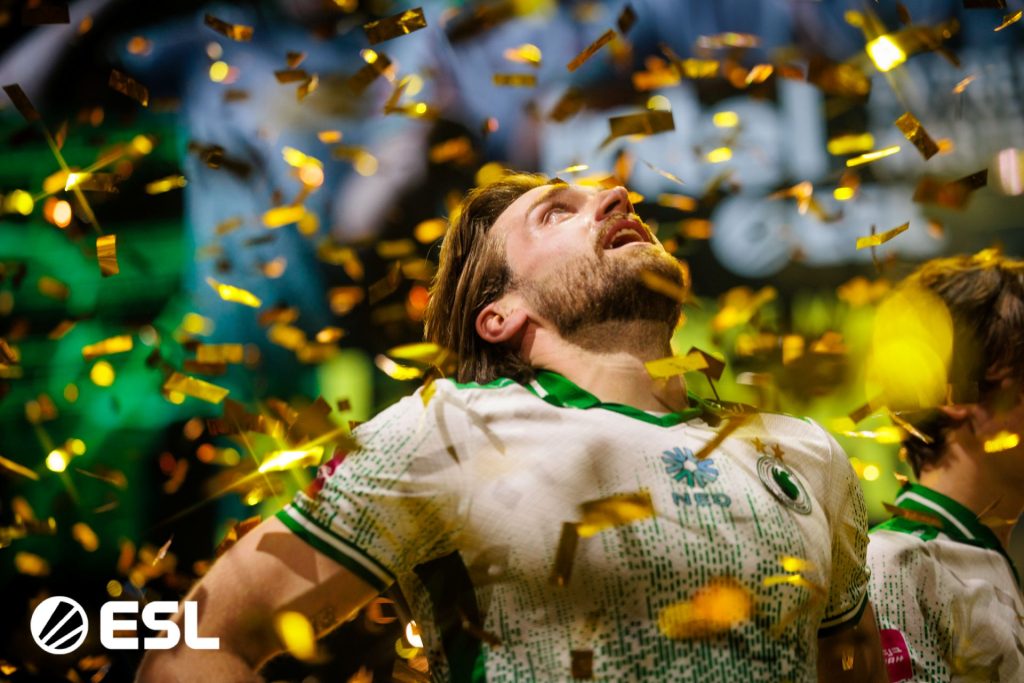
Cologne has been very successful in terms of growing an identity. What lessons from Cologne can you tag for other events?
So, I think the key thing is really that we need to build something that is meaningful to the players, and also something that the fans really enjoy, so one key thing that we’ve done here and in other events is we really look at all the feedback the fans give us: what did they like, what do they not like about the event.
Here, for example, we have a Thursday as a competition day; it’s kind of mandated by the Major schedule, but it gives us some insight into how we can do this at other events: Do people like it? Not like it? Is it maybe too much for them?
Then also what kind of things do they like to do on the side, what kind of things do we do, do we need to give them a conference, there’s parties, some of the clubs have parties here.
So, there’s really a lot of things that happen in Cologne that we try in terms of logistics around the event, fan experience, and then, based on the feedback we can then apply it when we either do another event and iterate on that, or we go to a completely new place, and then we already have a good sense for what works and what doesn’t.
At Katowice later this year, you’re doing EPL, where you have the Friday, which is going to have four matches as an alternative to having the Thursday. Are you also going to have a big focus on that event in terms of schedule and format?
I think so. I mean, Katowice is, for the first time not an IEM in a long time, and it’s still something that’s close to our heart, but there’s definitely some trade-offs to the Thursday one, because you require fans to be there for one more day, there’s one more day that the arena needs to be rented for, so depending on the scale of the event, it’s definitely not something that we would want to do for everything.
If we’re going back to Kraków next year, I think we just announced it this week that we will have four days as well, so we’ll start our big events, but for the rest we’re also trying to keep it manageable, so people don’t, once they travel in,
The upside in Katowice is you see everything, even if you only have time on the Friday, because that’s where the four matches are, whereas in Cologne, if you come on Friday, you have missed two of the quarter-finals already, so that’s a bit of the trade-off we’re trying to see.
Not every event is a Cologne or Kraków, so not every event is so big that fans can take out four days for it, so sometimes it will be those three days just to make it more manageable for them to attend.
As you say, not every event is Krakow or Cologne, but what efforts are ESL putting in to make those smaller events more meaningful?
So I think the way that our portfolio of events is structured is that not everything is positioned as the biggest, and there’s definitely always a local flavour.
If we’re going to Atlanta, for example, it’s typically a bigger focus on the local teams, like ‘how do the American teams perform here?’
There may be teams that you don’t necessarily see at other events, just because the VRS makes it a bit less easy to have things locally structured, like they were in the past, but just because of certain teams not being there, for example, there may be more space for a local North American team to be there.
So really looking at each of the events, what makes it exciting, and I think fans aren’t necessarily looking for a replica of Cologne every time, because they know that if they really want to do it, they can go to Cologne, but if Cologne happened 10 times a year, it also wouldn’t be the same.
So we’re really trying to look at each of them individually, and then in terms of what kind of local storylines exist, what’s interesting for fans here.
We’d really love to see at our Chinese events that the Chinese teams are performing well, so that would be great. For example, I think this interesting story, when we go to Brazil, has a big focus on the local heroes, so definitely the local component is one thing that’s big.
I think for Cologne people come and they’re fans of Counter-Strike, and at other events, there are definitely more local fans who care a lot about seeing their teams, their players, and we can give them that much more than we could give at Cologne, where it’s really just about ultimately the best team should win this event.
I think that’s what people expect, whereas for some of the other EPL events, there may be a bit more intimate atmosphere, there may be a bit more focus on ‘How does the Brazilian team do?’ ‘How are the Chinese teams doing?’ Just because with the number of events we have each year, we can mix it up a little bit every time.
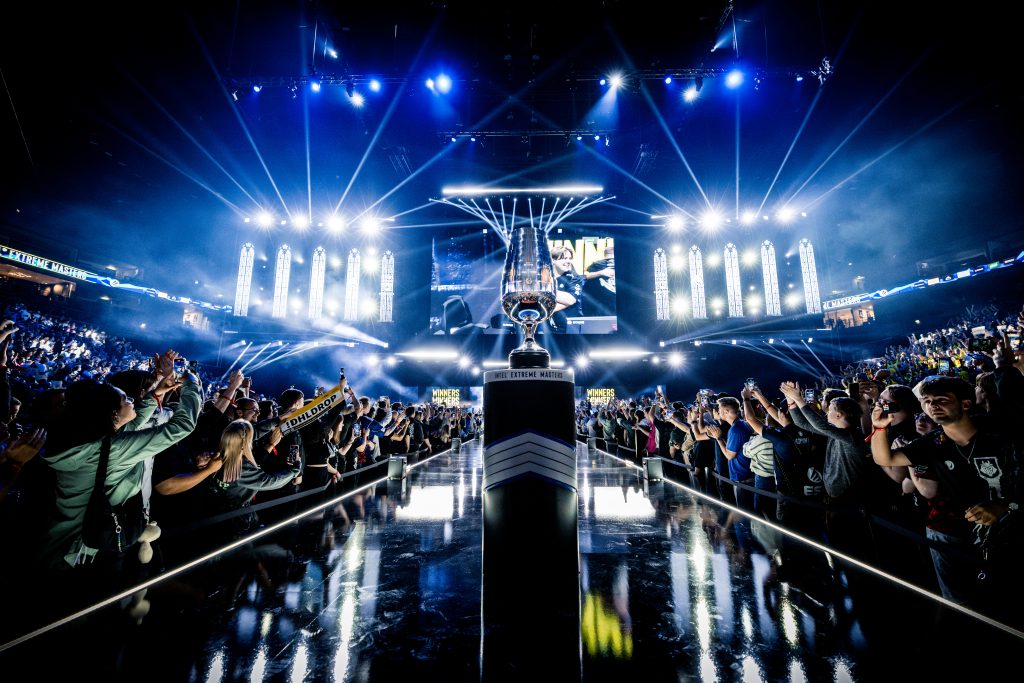
That can’t be easy to plan because in the VRS you’re only allowed so many Wildcard events per year, so you can’t just pick and choose to have local representation for every single event, right?
Yeah, 100%. It’s not something that we can plan, so we will then have to see what teams are present at the event, and that may sometimes be just pure chance that we have a team coming from the region or multiple teams from a region just because they’re high up in the VRS, and sometimes it’s then about finding the right storylines.
There are players on individual teams, or maybe an event means something to a certain lineup, like G2 won Atlanta that one year [IEM Dallas 2024], so coming back is an interesting story for them.
You can always find something, it’s not always easy to plan, but I think what we’ve shown is that no matter which teams end up playing the event, there’s going to be something that’s exciting both for fans on site and online.
Our job as the TO is then to tell the story in the right way, not just let chance happen, I think that’s what you could do, but we’re always trying to find something that tells people, ‘Okay, this is why this is exciting,’ like in Rio this year it was Vitality completing the Grand Slam, that was one of the stories, or Melbourne last year.
So there’s always something that we can pick and then tell as a story that we may not even have known about when we announced the event.
IEM Atlanta only had three of the top 10 teams in the VRS. Do you have any reflections on that event’s attendance?
I think for Atlanta this year, it was a couple of factors that came in. I think we’re always anticipating that the teams will not play every single event, that’s how the tournament agreement with the teams is also structured.
They can skip events, totally fine. If every event had the same teams, it also would be relatively boring at some point.
I think this year, a couple of factors came together. I think Visas have always been a topic for North America, but we know about that, there’s some trade-offs, just being in a certain region, that some teams have a harder time getting Visa, or may prioritise something else.
This year we had an overlap with Astana, and I think it’s also understandable to us that some teams would say this is an important fanbase for them to cater to the Russian-speaking ones, and they don’t have a good opportunity to go to other events, so that’s completely fine.
I think IEM Atlanta was still sold out in terms of tickets. I think people enjoyed it. The surveys we did afterwards were great, viewership was within what we’d expected, so it’s completely fine that not every event is a Cologne every year, that’s by design, it would probably just lessen the appeal.
It’s always interesting to us if maybe one of the favorites is missing, like, say, Vitality is at every event, well, they were in Atlanta now, but say at other events, if the one team that everybody expects to win is missing, all of a sudden opens up some interesting storylines for the teams that typically will only come in second.
Is there anything structurally that you can do to kind of help teams with Visas?
We absolutely try. I think the U.S. is one of those markets where it’s a bit more challenging; we definitely try to help them by also trying to align if there’s a BLAST event. For example, last year, 2025, we had the Dallas event, and it was the Austin Major right after, so teams needed to go to the U.S. anyway.
So it’s always good to bundle this, or give teams a reason to be in that region, not just once, but maybe for two events, because then they can also apply for a visa, taking those two events into account, and we can then collectively try to make that happen. We can’t influence every detail, but that definitely helps, and it definitely helped last year.
Is that something you coordinated with BLAST Fort Worth, also being in that time slot with IEM Atlanta?
We coordinate with BLAST a lot, we try to look at when are events happening, it doesn’t always work, but we definitely share where we’re going, and if some things can be flipped a little bit in terms of, ‘Let’s make sure there isn’t a North America event that’s immediately followed by an Australia event,’ for example, with the travel times, then we make it work.
So collaboration with BLAST has been historically pretty good, and we try to maintain it, but it doesn’t always work. Sometimes it’s this venue just available at that time, and then this venue, and then you don’t have any other solution.
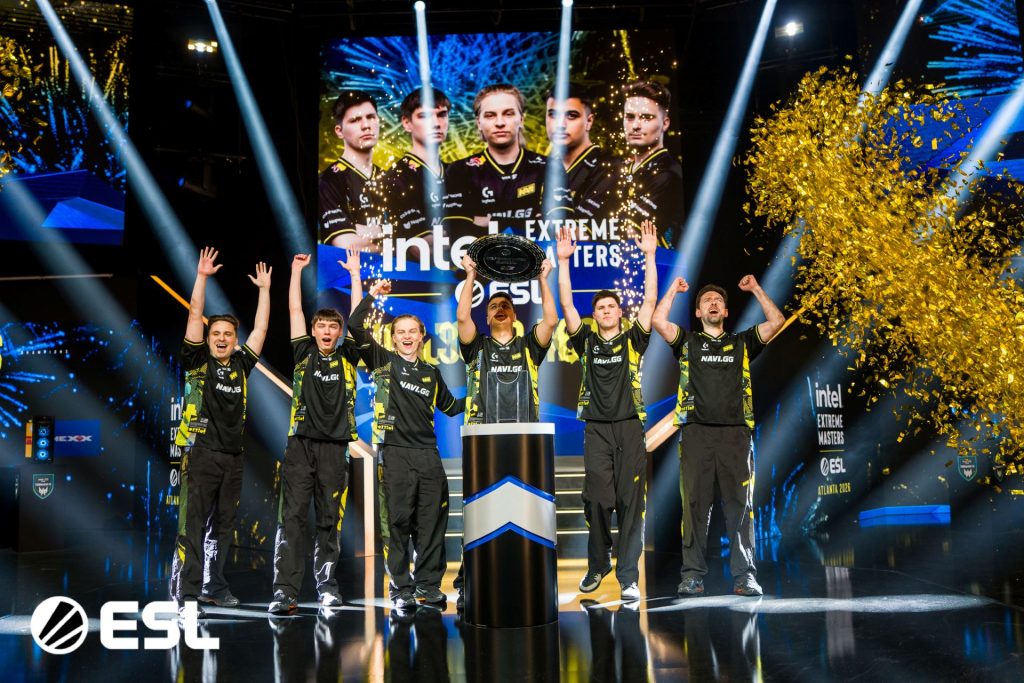
How has ESL’s circuit changed in the VRS era?
I don’t think there’s much that has changed for us. We have the same tournaments we had before; I think we have the same calibre of teams. I think we’ve had a solid business before, and how we work with the teams, how we share revenue with them, that’s still there.
I think it’s interesting that it’s now a much more defined path towards a Major. Before it used to be like you play those other events, but then it was the Major was just the regional ranking points, and then the RMR events, so there was really this qualifier element to it, and now playing each event is meaningful, and that’s good.
That’s always been the ambition, and we had this as well with ESL Pro Tour points before, because what we think is key is that there’s a meaning to the matches that teams play.
Yes, winning this event is important, but also going up in the ranking, and then qualifying for the major, not making the major, that’s been really interesting to see, and it’s much more defined now, and it’s also good that there’s a clear expectation for a team that if they make it up in the rankings, and they can play those events.
We’ve always had an open component to our tournaments; not every TO had that, and I think it’s good that it’s now the case that by playing well, you can make it into those tournaments and definitely be there, and there won’t be an artificial restriction, because you have to sign some kind of agreement.
That’s been a positive change, and also VRS has really done a lot for the Tier 2 scene, because, as we get closer to the major cutoff, there’s now all those tournaments that teams want to be in to get the final points, and there’s a real race, there’s also theory crafting, what needs to happen, who needs to win what, and that’s very exciting, because it’s part of the story building towards the major.
That’s not just all those teams have qualified, but this is the race, will this team make it or not, or they lost, I think it was Fnatic, for example, for this one, who closely missed out on a qualifier spot. It’s really interesting, makes it more meaningful to be at the major, if you’ve seen the story about how close the race was at the end.
And then we’re still collaborating with all the other TOs, I think that hasn’t changed, better with some, BLAST, and worse with others, but that hasn’t really changed a lot.
We’re very confident with the ecosystem that we’ve built; we don’t want it to grow bigger in terms of more events, because we’re pretty happy with the amount that we have. So yeah, I think overall, we’ve seen positive things out of those one and a half years of VRS so far.
Last year, there were a series of layoffs within ESL FACEIT Group. In regards to the War in Iran, are there any additional pressures to become a slimmer, more efficient company?
So the war in Iran hasn’t had any impact. I mean, I think, as a company, to run a sound and profitable business has always been the goal.
There have been a few steps along the way, including some of the layoffs that you mentioned. But that’s been the path that we’ve been on, also for Counter-Strike, and that we’ve publicly communicated to the teams that we’re not over-investing; this needs to work for everyone.
So that hasn’t been impacted by the war in Iran, I would say, and it’s because we’ve been on that path before, and we keep on it.
At the end of the day, it needs to work. The teams need to make sure that they don’t overspend, and you always need to make sure they don’t overspend. I think everything’s on track to be there.
So that hasn’t been impacted by the war in any way. Everything is the way it was before in terms of trajectory, I would say.
Last year, do you think there was a big shift in the company in terms of accelerating the path to profitability?
To some extent, definitely. I mean, priorities sometimes change in terms of what needs to happen, but I think the fact that Counter-Strike, for example, needs to be a profitable business, that’s always been there.
Nobody’s ever said this doesn’t need to be profitable. So I would say that it hasn’t been a major shift in that regard. It’s just some acceleration, I would say.
End of Interview
Which Counter-Strike roster changes would you like to see this off-season? Let us know your thoughts on the Insider Gaming Discord server.
For more Insider Gaming coverage, check out G2’s benching of Sunpayus and see his replacement. Also, be sure to subscribe to the Insider Gaming newsletter

Darragh is an Esports Journalist for Insider Gaming specialising in Counter-Strike. He loves to explore how esports teams work, or why they very often do not.
More from Darragh Harbinson
MOBILE APP
Level Up Your Gaming News
Real-time news, exclusive podcasts, push alerts, and a better reading experience.
Available on iOS & Android

Comments
[gs-fb-comments]